

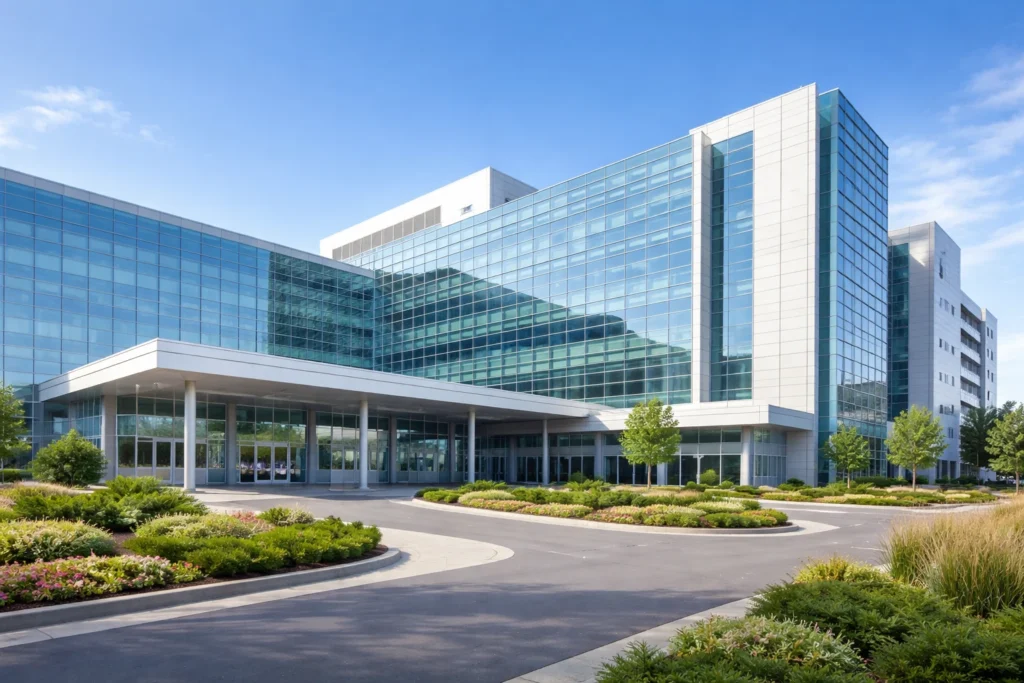
Healthcare facilities require specialized glass solutions that meet strict regulatory requirements while supporting operational efficiency. From HIPAA privacy compliance to fire-rated assemblies and acoustic control, every glazing decision impacts facility performance. At NorTex Glass & Mirror, we’ve been helping healthcare facilities across North Texas and Southern Oklahoma navigate these complex requirements since 2004. This complete guide explains what administrators, architects, and facility managers need to know about glass solutions for hospitals, clinics, and medical centers.
Healthcare buildings operate under more stringent regulations than typical commercial structures. Building codes, fire safety standards, privacy laws, and infection control protocols all influence glazing specifications. Understanding these requirements ensures compliance while optimizing facility performance.
Glass selection impacts multiple facility operations including energy costs, maintenance schedules, noise control, regulatory compliance, and long-term operational efficiency. Strategic glass choices reduce operating expenses while meeting all applicable standards.
The Health Insurance Portability and Accountability Act establishes strict requirements for protecting patient health information. While HIPAA doesn’t specifically mandate structural changes like soundproof walls, healthcare facilities must implement reasonable safeguards to prevent unauthorized disclosure of protected health information (PHI).
According to guidance from the U.S. Department of Health and Human Services, covered entities must protect PHI through administrative, physical, and technical safeguards. Glass selection directly impacts physical safeguards—the measures that limit physical access to information.
The HIPAA Privacy Rule requires that healthcare providers take reasonable steps to prevent PHI disclosure, including visual privacy. This doesn’t mean every space needs completely opaque walls, but it does require thoughtful glass design that prevents casual observation of protected information.
Healthcare facilities have multiple glass solutions for maintaining HIPAA-compliant privacy:
Frosted and Etched Glass provides permanent privacy while still allowing natural light transmission. These treatments obscure visibility at eye level, preventing passersby from seeing into consultation rooms or administrative areas where PHI might be visible. Frosted glass can be applied to the entire pane or just at specific heights, balancing privacy with natural light.
Tinted Glass reduces visibility from outside while maintaining clear views from inside. Bronze, gray, or specialized privacy tints create one-way visibility that protects privacy during daytime hours. The level of opacity can be customized based on the specific application.
Switchable Smart Glass represents the cutting-edge solution for dynamic privacy control. This electrochromic glass transitions from transparent to opaque at the touch of a button, allowing spaces to serve multiple purposes. Examination rooms can be transparent for natural light when unoccupied, then switched to private during consultations.
Laminated Glass with Privacy Interlayers combines security, sound control, and privacy in a single solution. Specialized interlayer materials can obscure visibility while maintaining excellent light transmission and acoustic performance.
Visual privacy is only part of HIPAA compliance. Preventing conversations from being overheard is equally important. While HHS guidance clarifies that complete soundproofing isn’t required, reasonable safeguards must be in place.
High-performance acoustic glass provides these safeguards. Laminated glass with specialized acoustic interlayers achieves Sound Transmission Class (STC) ratings of 40 to 54, significantly reducing speech transmission between spaces. This level of acoustic control supports HIPAA compliance while maintaining the benefits of glass design.
Healthcare buildings require specialized fire-rated glass assemblies to meet building codes while maintaining visibility and natural light distribution throughout facilities.
Fire-rated glazing is tested and labeled based on how long it can withstand fire exposure. Common ratings include 20, 45, 60, and 90 minutes. The International Building Code and National Fire Protection Association standards establish where fire-rated glass is required in healthcare facilities.
Two categories of fire-rated glass exist:
Fire-protective glass blocks flames and smoke but doesn’t prevent radiant heat transmission. Traditional wired glass falls into this category, though it’s problematic because it fails impact safety standards and can cause severe lacerations.
Fire-resistive glass blocks flames, smoke, and radiant heat. Modern ceramic and intumescent laminated products meet both fire codes and impact safety requirements, making them the superior choice for healthcare applications.
Fire-rated glass is required in specific locations including exit corridors, stairwells, occupancy separations, and doors in fire-rated walls. In healthcare facilities, these requirements extend to areas separating different departments and protecting means of egress.
Modern fire-rated glass products allow floor-to-ceiling transparent walls in corridors and administrative areas, maximizing natural light distribution throughout buildings while maintaining full fire protection. This integration of safety and design represents a significant advancement over traditional solid fire-rated walls.
Healthcare facilities experience unique safety challenges. High-traffic corridors, medical equipment transport, and mobility assistance devices all increase the risk of glass impact. Safety glazing requirements address these risks.
The Consumer Product Safety Commission establishes safety glazing standards under CPSC 16 CFR 1201. Glass in doors, sidelites, and other hazardous locations must be tempered or laminated safety glass.
Tempered safety glass is four to five times stronger than standard annealed glass. When it does break, it shatters into small, relatively harmless pieces rather than dangerous shards. Tempered glass is the standard choice for most interior healthcare applications.
Laminated safety glass consists of multiple glass layers bonded with plastic interlayers. When broken, the glass fragments adhere to the interlayer, maintaining a barrier and preventing injury. Laminated glass is preferred in higher-risk locations and where post-breakage security is important.
Behavioral health units and psychiatric facilities require enhanced safety glazing that can withstand intentional impact. Polycarbonate-laminated glass assemblies provide impact resistance far exceeding standard safety glass while maintaining the appearance and cleanability of glass.
These specialized products can resist repeated impacts from objects or physical strikes, protecting both staff and facility property. The transparent nature of these barriers maintains necessary sight lines for monitoring while providing a secure environment.
Noise control is a critical operational concern in healthcare facilities. The World Health Organization recommends hospital noise levels not exceed 35 decibels during the day and 30 decibels at night, yet typical hospitals often reach 70 decibels or higher.
Excessive noise disrupts facility operations, creates stressful work environments for staff, and generates complaints that impact facility satisfaction scores. Managing noise through proper glass selection supports smooth operations and regulatory compliance.
High-performance acoustic glass significantly reduces noise transmission between spaces. Sound Transmission Class ratings measure acoustic performance—higher numbers indicate better sound blocking.
Standard single-pane glass achieves STC ratings around 27, which allows normal conversation to be heard through the glass. Laminated glass with acoustic interlayers reaches STC ratings of 40 to 54, providing substantial noise reduction while maintaining transparency.
For consultation rooms, administrative offices, and spaces requiring speech privacy, STC 40 or higher is recommended. This level prevents normal conversation from being understood through the glass, supporting both HIPAA compliance and operational efficiency.
Traditional acoustic solutions like solid walls block both sound and light. Modern laminated glass allows healthcare facilities to maintain natural light and visual connection while achieving acoustic performance comparable to traditional walls.
This capability is particularly valuable in nurse stations, where staff need visual monitoring capabilities while also requiring quiet spaces for administrative work and communication. Acoustic glass partitions provide the perfect balance.
Healthcare facilities operate 24/7 with extensive HVAC requirements. Energy-efficient glazing directly impacts operational costs while supporting sustainability initiatives.
Two key metrics define glass energy performance:
U-value measures heat transfer through glass. Lower U-values indicate better insulation. Standard single-pane glass has a U-value around 1.0, while high-performance insulated glass units achieve U-values of 0.25 to 0.35.
Solar Heat Gain Coefficient (SHGC) measures how much solar heat passes through glass. In hot climates like Texas and Oklahoma, lower SHGC values (0.25 to 0.40) reduce cooling loads by blocking solar heat while still admitting natural light.
Low-emissivity (Low-E) coatings are microscopically thin metallic layers applied to glass surfaces. These coatings reflect infrared light while allowing visible light transmission, significantly improving energy performance.
According to the U.S. Department of Energy, buildings can reduce energy consumption by 20 to 30 percent with proper Low-E glass installation. For a typical 50,000-square-foot medical facility, this represents annual savings of $15,000 to $25,000 in energy costs.
Low-E glass also blocks 99 percent of ultraviolet rays, protecting flooring, furniture, and artwork from fading—an important consideration for healthcare facilities investing in interior finishes and design elements.
The North Texas and Southern Oklahoma climate presents specific challenges. Hot summers with intense solar exposure require glass that blocks heat while admitting light. Mild winters reduce heating requirements but don’t eliminate them entirely.
Spectrally selective Low-E coatings are ideal for this climate. These advanced coatings block 60 to 70 percent of solar heat while transmitting 60 to 70 percent of visible light, optimizing both comfort and energy efficiency.
For west and south-facing facades with maximum solar exposure, consider additional shading strategies. External shading devices, combined with high-performance glass, provide the most effective solar control while maintaining beneficial natural light.
Different areas within healthcare facilities require different glass solutions based on their specific operational needs.
Medical offices, consultation rooms, and administrative areas require strong privacy protections under HIPAA. Frosted glass at eye level combined with clear glass above provides privacy while maintaining natural light distribution. Switchable smart glass offers dynamic privacy control for spaces serving multiple functions.
Acoustic laminated glass prevents conversation from being overheard in adjacent spaces or hallways, supporting both regulatory compliance and operational efficiency.
Lobbies, waiting areas, and public corridors benefit from maximum transparency to create welcoming, well-lit environments. Floor-to-ceiling glass walls with high visible light transmission create bright, open spaces.
Impact-resistant laminated glass in high-traffic areas withstands the inevitable bumps from wheelchairs, gurneys, and medical equipment while providing superior acoustic performance that reduces ambient noise levels.
Surgical suites have specialized requirements including high light levels, easy cleaning, and clear visibility for observation and teaching. Some modern surgical centers incorporate glass walls for observation galleries, using specialized one-way privacy glass that allows viewing from outside while maintaining privacy.
Antimicrobial coatings on glass surfaces reduce pathogen transmission in these critical spaces, supporting infection control protocols.
ICU environments require clear sight lines for monitoring while providing privacy during procedures. Large glass windows in ICU spaces with privacy controls allow continuous visual oversight while giving privacy when needed.
Isolation rooms require specialized glazing that maintains pressure differentials while providing visibility. Sealed insulated glass units with appropriate structural support meet these requirements.
Beyond basic glass types, specialized coatings enhance performance for healthcare applications.
Hospital-acquired infections represent a serious facility management concern. Antimicrobial glass coatings containing silver ions actively kill bacteria, viruses, and fungi on glass surfaces. While these coatings don’t replace regular cleaning protocols, they provide an additional layer of protection between cleanings.
These coatings are particularly valuable on high-touch surfaces like door glass panels, entry doors, and interior partitions in exam rooms.
Healthcare facilities require frequent cleaning to maintain infection control. Easy-clean glass treatments create hydrophobic surfaces that repel water, dirt, and fingerprints. These treatments reduce cleaning time and frequency while maintaining optical clarity.
The reduced cleaning requirement translates to labor savings and reduced chemical use—both operational benefits and environmental advantages.
While most Low-E glass already blocks 99 percent of UV rays, some specialized healthcare applications require additional UV protection. Specialized UV-blocking glass prevents harmful radiation from entering sensitive areas or spaces housing valuable medical equipment sensitive to UV exposure.
Healthcare glazing projects involve complex requirements, tight timelines, and strict regulations. Professional installation is essential for achieving optimal results.
Experienced commercial glaziers bring specialized knowledge critical for healthcare projects:
Regulatory Expertise: Understanding applicable building codes, fire ratings, safety standards, and healthcare-specific requirements including Joint Commission standards and infection control protocols.
Project Coordination: Healthcare facilities operate continuously. Professional glaziers coordinate installation around ongoing operations, minimizing disruption to facility activities. This often means working during off-hours or in carefully sequenced phases.
Quality Assurance: Proper installation ensures glass performs as specified. This includes achieving rated fire protection, meeting acoustic performance targets, and ensuring long-term weather sealing and structural integrity.
Compliance Documentation: Healthcare facility accreditation requires extensive documentation. Professional glaziers provide material certifications, testing reports, and installation documentation needed for Joint Commission surveys and regulatory compliance.
Healthcare facilities should evaluate glazing contractors based on specific criteria:
Healthcare Experience: Verify contractors have completed similar healthcare projects. Request references from other hospitals, clinics, or medical centers.
Licensing and Insurance: Confirm proper licensing for commercial glazing work and comprehensive insurance coverage including general liability and workers compensation. Healthcare facilities have unique liability considerations requiring appropriate coverage.
Technical Capability: Ensure contractors understand fire-rated assemblies, acoustic performance, HIPAA considerations, and infection control protocols. The right partner brings solutions, not just glass installation.
Project Management: Healthcare projects have complex logistics. Contractors should demonstrate strong project management capabilities including coordination with other trades, adherence to schedules, and minimal disruption to operations.
At NorTex Glass & Mirror, our team has extensive experience with healthcare facility glazing throughout North Texas and Southern Oklahoma. We understand the unique requirements of medical environments and work closely with facility managers to deliver solutions that meet clinical, regulatory, and budgetary requirements.
Healthcare administrators often ask about costs and return on investment for quality glazing systems. Understanding the complete financial picture helps justify appropriate investments.
Healthcare glazing costs vary significantly based on performance requirements:
Standard Safety Glass: $25 to $45 per square foot installed for basic tempered glass in common areas
High-Performance Energy-Efficient Glass: $40 to $75 per square foot for Low-E insulated glass units with excellent thermal performance
Acoustic Laminated Glass: $50 to $90 per square foot for high-STC assemblies providing superior noise control
Fire-Rated Glass Systems: Add $35 to $85 per square foot to base glass costs depending on fire rating duration and whether fire-protective or fire-resistive performance is required
Smart Glass Technology: $75 to $150 per square foot for electrochromic switchable privacy glass
Specialized Security Glass: $100 to $200+ per square foot for impact-resistant assemblies for behavioral health units
While premium glass costs more initially, the returns extend across multiple areas:
Energy Savings: High-performance glass reducing energy costs by 20 to 25 percent pays for itself in 5 to 8 years through utility savings alone. For a facility spending $100,000 annually on HVAC, that’s $20,000 to $25,000 saved per year.
Operational Efficiency: Proper acoustic control reduces noise complaints and supports smooth facility operations. HIPAA-compliant privacy glass reduces regulatory compliance risks.
Maintenance Costs: Quality glass installations last 25 to 30 years with minimal maintenance. Poor-quality installations may require replacement in 10 to 15 years, effectively doubling lifetime costs.
Facility Ratings: HCAHPS scores directly impact Medicare reimbursement. Facilities in the top quartile receive bonus payments while those in the bottom quartile face penalties. Improved physical environments including proper acoustics and natural light measurably improve satisfaction scores.
Healthcare design continues evolving, with several important trends shaping future glazing requirements.
Smart glass technology is becoming more affordable and reliable. Future healthcare buildings may feature entire facades of electrochromic glass that automatically adjusts tint levels based on sun position, occupancy, and operational requirements.
This dynamic control optimizes natural light benefits while maintaining energy efficiency and privacy—previously conflicting goals that smart glass technology now reconciles.
Advanced glazing increasingly integrates with building automation systems. Sensors monitoring natural light levels adjust artificial lighting and shade positions automatically, optimizing comfort and energy performance. This integration creates responsive environments that adapt to changing conditions throughout the day.
Healthcare facilities increasingly incorporate connections to nature through transparent walls to courtyards and healing gardens. Glass plays a central role by providing views of nature and maximizing natural light distribution throughout facilities.
Glass solutions represent a critical investment in healthcare facility operations. The right glazing choices maintain privacy under HIPAA requirements, control noise for operational efficiency, improve energy performance, meet all fire and safety codes, and reduce long-term maintenance costs.
While premium glass systems require higher initial investment, the returns—energy savings, regulatory compliance, operational efficiency, and reduced maintenance—far exceed costs. Healthcare facilities that prioritize quality glazing create better operational outcomes while improving long-term performance.
At NorTex Glass & Mirror, we’ve been helping healthcare facilities across North Texas and Southern Oklahoma make informed glazing decisions for over 20 years. Our team understands the complex interplay of regulatory requirements, operational needs, and budget realities that healthcare projects demand.
Ready to discuss glazing solutions for your healthcare facility? Contact NorTex Glass at (903) 813-0985 for a consultation. We’ll assess your specific needs, explain appropriate options, and provide detailed proposals with transparent pricing.
Whether you’re planning a new medical facility, renovating an existing hospital, or upgrading specific departments, we bring the expertise and experience to deliver glass solutions that support your facility operations.
Explore our portfolio of completed projects or visit NorTex Glass & Mirror to learn more about our commercial glazing capabilities.
Industrial facilities and manufacturing plants face a unique challenge: balancing the need for durability and safety with operational efficiency. While …
Modern offices are abandoning traditional closed-door layouts in favor of flexible, light-filled spaces that support collaboration while maintaining necessary privacy. …
Complete guide to healthcare facility glass solutions. HIPAA compliance, fire-rated systems, acoustic control & energy efficiency for hospitals in North Texas & Oklahoma.