


Walk through any commercial building and you will see glass in dozens of places: the entry doors, the storefront, the conference room, the upper-floor windows. It all looks like glass. It is not all the same glass.
Choosing the wrong type can mean failed inspections, higher energy bills, or a break that puts people at risk. Choosing the right one means a building that is safer, more comfortable, and easier to maintain. Here is a plain-English guide for building owners and facility managers across North Texas and Southern Oklahoma.
These terms describe different things, and they can be combined. A single window can be insulated, laminated, and low-E at the same time.
Tempered glass is heated and rapidly cooled to build strength into the surface. It is several times stronger than standard annealed glass. When it does break, it crumbles into small, relatively blunt pieces instead of long, sharp shards.
Where it is used: Entrance doors, sidelites, glass partitions, shower and restroom enclosures, and other locations where people may come into contact with the glass.
Keep in mind: Tempered glass cannot be cut or drilled after tempering, so it must be fabricated to size. When it breaks, it breaks completely, leaving an open hole.
Laminated glass bonds two or more layers of glass with a tough interlayer. When it breaks, the interlayer holds the fragments in place. The glass may crack, but the opening stays closed.
Where it is used: Overhead and sloped glazing, storefronts that need added security, locations that need sound reduction, and buildings that need protection from debris or forced entry.
Keep in mind: Laminated glass costs more than tempered, but it keeps the building envelope intact after an impact. For more on how this applies to severe weather, see our guide to storm-resistant glass for North Texas businesses.
An insulated glass unit is two or more panes separated by a sealed air space. That gap slows heat transfer, which helps keep interiors comfortable and reduces the load on heating and cooling systems. Low-E coatings and tints can be added to manage heat and glare.
Where it is used: Exterior windows, storefront systems, and curtain walls in nearly every climate-controlled commercial building.
Keep in mind: The panes in an IGU can be tempered, laminated, or annealed. You choose the unit for its thermal performance and then choose the glass in each pane for its safety needs. We cover the energy side in more detail in How Energy Efficient Commercial Glass Can Transform Your Business.
| Tempered | Laminated | Insulated (IGU) | |
| Main benefit | Strength and safe breakage | Stays in the frame when broken | Thermal comfort and efficiency |
| Common locations | Doors, sidelites, partitions | Overhead glazing, security and storm areas | Exterior windows, storefronts, curtain walls |
| Can combine with others | Yes | Yes | Yes, using tempered or laminated panes |
Ask these questions for each opening in your building:
Safety glazing requirements depend on the location, size, and height of the glass and on the building code your jurisdiction has adopted, so confirm requirements for your project with your local building official.
Tempered glass is heat-treated for strength and breaks into small, blunt pieces. Laminated glass has an interlayer between two or more layers of glass, so when it cracks, the fragments stay bonded in place. Tempered glass is chosen for strength and safe breakage. Laminated glass is chosen when the opening needs to stay closed after a break.
Yes. An insulated glass unit can use laminated glass for one or both panes, and it can also include a low-E coating. This is common where a building needs thermal performance along with added security, sound control, or storm protection.
Safety glazing, usually tempered or laminated, is typically required in hazardous locations such as doors, sidelites beside doors, and large panes close to the floor. Exact requirements depend on the glass location and size and the building code your jurisdiction has adopted, so confirm them with your local building official before ordering.
No. Tempered glass cannot be cut, drilled, or reworked after the tempering process, so it has to be fabricated to its final size. If a tempered lite breaks, the whole lite must be replaced.
The most common sign is fogging or condensation between the panes, which usually means the seal has failed and the sealed air space is no longer doing its job. Drafts and noticeably uneven temperatures near a window can also point to a problem. A failed unit generally needs to be replaced, and a glazing contractor can inspect it and recommend next steps.
Nortex Glass is a fully bonded commercial glazing contractor serving North Texas and Southern Oklahoma from our offices in Sherman and Plano. Whether you are planning a new build, a storefront upgrade, or a replacement, our team can help you specify the right glass for every opening.
Ready to talk through your project? Call us at 903.813.0985 or request a quote today.
Tempered, laminated, or insulated glass? Compare how each commercial glass type performs and where your building needs it. Nortex Glass, Sherman, TX.
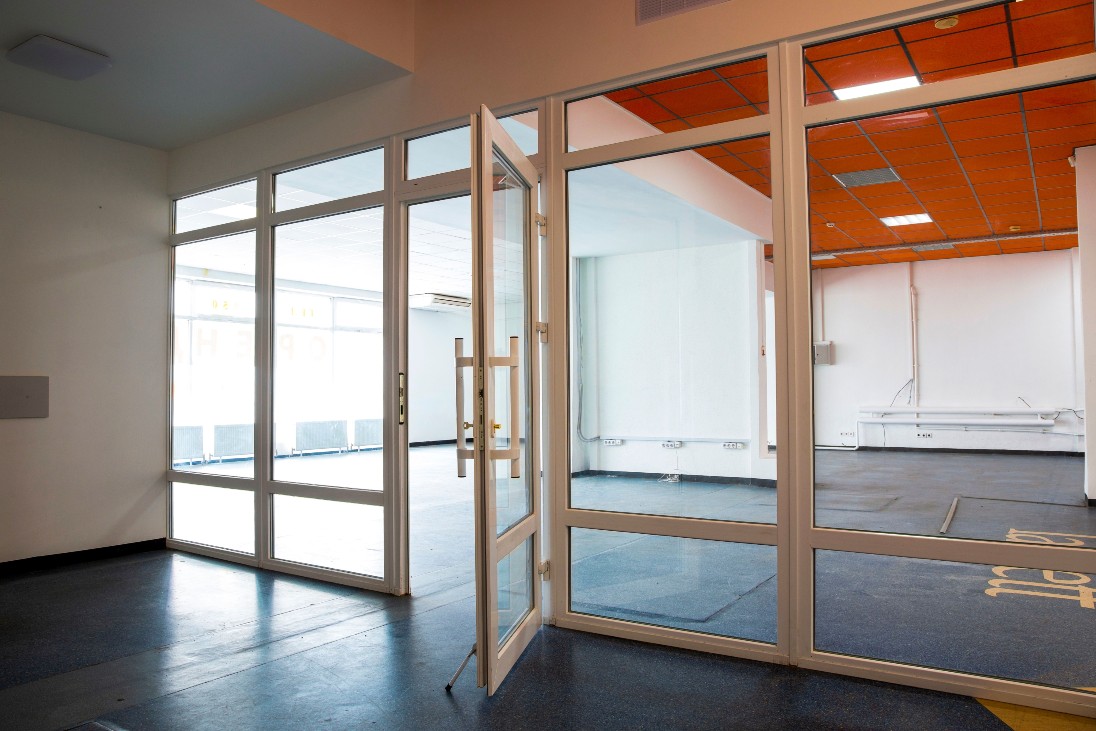
Every commercial building has walls and doors designed to slow a fire down. They separate corridors, stairwells, and exits from …

Planning a stadium, field house, or athletic facility? Learn how to choose safe, durable sports complex glazing, from press box windows to game-day entrances.